


The decision to embark on a safari in Tanzania represents more than booking a vacation—it marks the beginning of a life-changing journey into some of Earth’s most pristine wilderness areas. Tanzania has earned its reputation as Africa’s ultimate safari destination through a remarkable combination of extraordinary wildlife density, breathtaking landscapes spanning diverse ecosystems, and a conservation ethic that prioritizes long-term preservation over short-term exploitation. From the moment travelers arrive in this East African nation, they enter a world where nature operates on its own terms, where predators hunt daily for survival, and where the rhythms of life follow patterns established millions of years ago.
Tanzania’s Unique Position in African Safari Tourism
Few countries can claim Tanzania’s impressive conservation credentials. The nation has set aside approximately 38% of its total land area for wildlife protection through a sophisticated network of national parks, game reserves, conservation areas, and wildlife management zones. This extensive protection system creates contiguous wilderness blocks large enough to support complete ecosystems with full complements of predators, herbivores, and the intricate web of species that connect them. Such large-scale conservation is increasingly rare in our crowded world, making Tanzania’s commitment exceptional.
The geographical diversity within Tanzania’s borders produces habitat variety that supports remarkable species richness. Coastal plains transition into highlands, volcanic mountains pierce the sky, Great Rift Valley escarpments create dramatic topography, and vast savanna grasslands roll toward distant horizons. Each ecosystem harbors specialized wildlife communities—what thrives in the Serengeti’s open plains differs from species inhabiting Tarangire’s baobab woodlands or those adapted to Ruaha’s rocky terrain. This diversity means visitors can experience multiple distinct African environments within a single safari itinerary.
Tanzania’s safari industry benefits from decades of development that have created professional standards without sacrificing wilderness authenticity. International-standard lodges coexist with traditional tented camps, experienced guides undergo rigorous training and certification, and tourism operators understand that their long-term success depends on maintaining the very wilderness and wildlife that attract visitors. This maturity distinguishes Tanzania from emerging destinations still developing their tourism infrastructure and from overdeveloped areas where excessive visitation has degraded the very experiences tourists seek.
Exploring Tanzania’s Iconic Safari Territories
Serengeti National Park: The Endless Plain
The Serengeti’s 14,750 square kilometers encompass Africa’s most celebrated wildlife sanctuary, where the greatest mammal migration on Earth unfolds annually in a cycle older than human civilization. The park’s name derives from the Maasai word “Siringet,” meaning “endless plains,” a description that becomes viscerally understood when standing amid grasslands that stretch unbroken to horizons in every direction. This landscape, seemingly simple at first glance, contains remarkable complexity—short grass plains in the south where volcanic soils create nutrient-rich grazing, central woodlands dominated by acacia trees, western corridor riverine forests, and northern hills covered in dense bush.
The wildebeest migration draws worldwide attention, and deservedly so. Approximately 1.5 million wildebeest, accompanied by 200,000 zebras and various gazelle species, follow rainfall patterns in a roughly circular route covering some 800 kilometers. Their journey synchronizes with calving season in the southern Serengeti from January through March, when hundreds of thousands of calves are born within a compressed timeframe. This abundance attracts predators in extraordinary concentrations—lion prides, leopards, cheetahs, and hyena clans all capitalize on vulnerable young and weakened adults. The spectacle continues through river crossings at the Grumeti River in June and July, culminating in the dramatic Mara River crossings from July through October when herds plunge into crocodile-infested waters in desperate bids to reach northern grasslands.
Beyond migration drama, the Serengeti supports resident wildlife populations that alone would establish it as a premier destination. The park harbors an estimated 3,000 lions, perhaps Africa’s largest remaining population in a single protected area. These apex predators have adapted varied hunting strategies—some prides specialize in buffalo, others focus on zebra or topi, and individuals have even learned to hunt giraffes. Leopards, though naturally secretive, appear with surprising regularity in areas like the Seronera Valley where rocky kopjes provide ideal denning sites. Cheetahs favor open plains where their explosive speed—reaching 110 kilometers per hour—provides hunting advantages over heavier predators. The complete predator guild creates constant drama as animals navigate survival challenges that have shaped their evolution.
Ngorongoro Conservation Area: The Eighth Wonder
The Ngorongoro Crater stands as one of nature’s most remarkable creations, formed when a massive volcano—potentially as tall as Mount Kilimanjaro—exploded and collapsed some two to three million years ago. The resulting caldera, with walls rising 600 meters above the crater floor, creates a natural amphitheater spanning 260 square kilometers. This geological marvel functions as an evolutionary laboratory where animals live their entire lives within the crater’s protective walls, rarely ascending the steep slopes or venturing into the highlands beyond.
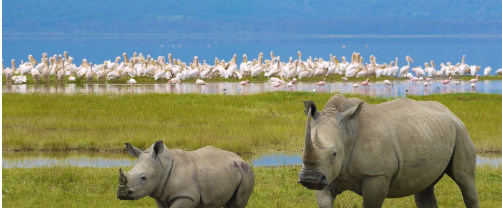
Wildlife concentrations within Ngorongoro rival anywhere on Earth. Approximately 25,000 large mammals inhabit the crater floor, creating densities that virtually guarantee sightings of the Big Five within a single game drive. Lions patrol territories with boundaries defined more by social dynamics than geography, as the crater’s constraints prevent territorial expansion. These lions have become habituated to safari vehicles, allowing remarkably close observations of hunting, feeding, and social interactions. Black rhinoceros, among Earth’s most endangered large mammals, maintain a breeding population here—one of Tanzania’s few remaining strongholds for these critically threatened animals.
The crater’s ecological self-sufficiency creates unusual stability. Lake Magadi, a shallow soda lake, attracts flamingos when water levels permit. Permanent springs ensure year-round water availability. The Lerai Forest provides refuge for elephants and other species during midday heat. Grasslands covering much of the crater floor support zebras, wildebeest, gazelles, and buffalo in large numbers. This habitat diversity within a confined area means animals seldom leave, creating viewing conditions unmatched elsewhere in Tanzania.
Tarangire National Park: The Elephant Sanctuary
Tarangire National Park demonstrates African ecology’s seasonal nature in spectacular fashion. During the wet season from November through May, wildlife disperses across a vast ecosystem exceeding 20,000 square kilometers. But as dry months progress from June through October, the Tarangire River becomes the region’s only reliable water source, concentrating animals in densities approaching those of more famous parks. This seasonal congregation transforms Tarangire from a pleasant park into an extraordinary wildlife theater.
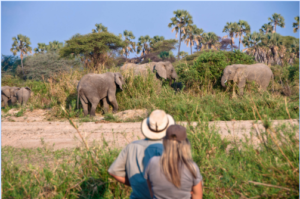
Elephants particularly favor Tarangire, with some researchers estimating dry season populations approaching 5,000 individuals. These elephants, among Africa’s largest, often carry impressive tusks that heavy poaching has eliminated in less protected areas. Family groups led by matriarchs navigate complex social structures, demonstrating problem-solving abilities and emotional capacities that continue revealing the species’ remarkable intelligence. Observing these interactions—youngsters playing, adults protecting vulnerable calves, family groups greeting each other with elaborate trunk-touching ceremonies—provides insights into animal cognition that challenge assumptions about consciousness and awareness.
The park’s iconic baobab trees create landscape characters found in few other Tanzanian parks. These ancient giants, with scientific evidence suggesting lifespans exceeding 2,000 years in some cases, dominate certain areas of Tarangire. Their bizarre appearance—trunks resembling bottles, branches resembling roots pointing skyward—has inspired African legends suggesting the gods planted them upside down. Beyond their aesthetic appeal, baobabs play crucial ecological roles, storing thousands of liters of water in their fibrous trunks, providing nesting cavities for birds and mammals, and offering emergency food sources during droughts when elephants strip their bark to access moisture.
Lake Manyara National Park: The Compact Gem
Lake Manyara National Park, though small at just 330 square kilometers, delivers disproportionate wildlife diversity through varied habitats compressed into a compact area. The park stretches along the Great Rift Valley escarpment, with Lake Manyara itself—a shallow alkaline lake—covering roughly two-thirds of the park’s area during high water periods. The remaining third contains groundwater forests, acacia woodlands, open grasslands, and swamps, each supporting distinct wildlife communities.
Manyara gained fame for tree-climbing lions, a behavior uncommon in most lion populations. Researchers debate why Manyara lions regularly climb trees—theories include escaping biting flies, seeking cooling breezes, or simply gaining vantage points over tall grass. Regardless of motivation, observing lions draped across acacia branches creates memorable photographic opportunities and unusual sightings. The park also harbors one of Africa’s highest elephant population densities relative to area, with herds moving through the forests with surprising stealth despite their massive size.
The lake itself, when filled with water, attracts enormous flocks of flamingos—sometimes numbering in the tens of thousands—that filter-feed on algae thriving in the alkaline waters. Over 400 bird species have been recorded in the park, making it exceptional for ornithological enthusiasts. Pelicans, storks, cormorants, and numerous waterfowl species create constant activity along the shoreline, while forest species including hornbills, turacos, and barbets inhabit the dense groundwater forest zone.
Remote Wilderness: Nyerere and Ruaha
For travelers seeking authentic wilderness experiences away from tourist concentrations, Tanzania’s southern parks deliver unforgettable adventures. Nyerere National Park, carved from the northern section of the former Selous Game Reserve, protects 30,000 square kilometers of pristine wilderness centered on the Rufiji River. This massive waterway, Tanzania’s largest by volume, creates intricate networks of channels, seasonal floodplains, and permanent pools supporting aquatic and terrestrial ecosystems in remarkable balance.
Nyerere’s character differs fundamentally from northern parks. Miombo woodland dominates rather than open grasslands, creating habitat favoring species less common elsewhere. African wild dogs, among the continent’s most endangered carnivores, maintain viable populations here. Boat safaris along Rufiji channels provide unique perspectives—drifting silently past hippo pods, massive crocodiles, and elephants wading through shallows creates intimate encounters impossible from vehicles. Walking safaris with armed rangers allow tracking animals on foot, reading signs in sand and vegetation, and understanding interconnections between species that vehicle-based viewing misses.
Ruaha National Park, Tanzania’s largest at over 20,000 square kilometers, occupies a transitional zone where eastern and southern African ecosystems converge. This geographical position produces exceptional biodiversity as species from both regions overlap. The park particularly excels for elephant viewing—populations estimated around 15,000 make Ruaha an elephant stronghold crucial for species survival. The Great Ruaha River creates the park’s backbone, its seasonal flows determining wildlife distributions and creating dramatic landscapes of baobabs, rocky outcrops, and riverine forests.
Planning Essentials for Safari Success
Optimal Timing Based on Experience Goals
Safari timing dramatically affects the experience you receive. The peak dry season from late June through October offers optimal general wildlife viewing—minimal rainfall, moderate temperatures, thinning vegetation providing clear sightlines, and concentrated animals around permanent water sources. These months also coincide with the migration’s presence in northern Serengeti and dramatic Mara River crossings, though exact timing shifts based on rainfall variations. However, peak season brings higher accommodation costs, increased visitor numbers in popular areas, and advance booking requirements.
The green season from November through May transforms Tanzania’s landscapes. Early rains in November trigger grass regeneration, trees leaf out, and migrant bird species arrive from Eurasia in their thousands. December through February constitutes a “short dry period” between rain cycles, offering excellent conditions with fewer crowds than peak season. The southern Serengeti calving season during these months creates extraordinary predator activity as lions, cheetahs, and hyenas exploit vulnerable newborns. The long rains from March through May bring the heaviest precipitation, lushest vegetation, lowest prices, and smallest crowds, though some seasonal camps close and roamd conditions can prove challenging.
Understanding Safari Logistics and Structure
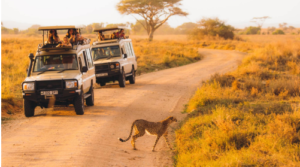
Most visitors to Tanzania join organized safaris arranged through tour operators who handle all logistics—accommodation bookings, vehicle provision, guide assignment, park permits, and coordination. This approach maximizes efficiency and ensures professional standards, particularly valuable for first-time safari-goers unfamiliar with African travel. Safari vehicles are typically customized 4×4 Land Cruisers or Land Rovers with pop-up roofs allowing 360-degree visibility and photography angles. Group sizes vary from private (just your party) to small groups of six to eight people sharing one vehicle.
Safari days typically follow similar patterns. Early morning game drives begin at dawn when nocturnal animals return to daytime refuges and diurnal species begin feeding. Midday heat sends most animals to shade for resting, allowing return to camp or lodge for lunch and relaxation. Afternoon game drives start around 3:30 or 4:00 PM, continuing until sunset when park regulations require exiting. Some parks and private concessions permit night drives that reveal nocturnal species like leopards, hyenas, and smaller carnivores rarely seen during daylight.
Enrichment Activities Beyond Traditional Game Viewing
Safari experiences extend well beyond vehicle-based wildlife viewing. Hot air balloon safaris over the Serengeti launch before dawn, ascending as sunrise paints the landscape in golden hues. From several hundred meters altitude, the Serengeti’s scale becomes comprehensible—migration herds appear as dark ribbons flowing across grasslands, predators stalk prey in dramas visible from above, and the ancient rhythms of this ecosystem reveal themselves. Flights conclude with champagne breakfasts served under acacia trees, celebrating the adventure with fine food and beverages in the bush.
Walking safaris change wilderness engagement fundamentally. Moving on foot through wildlife territory, armed rangers providing security, visitors experience heightened awareness and sensory engagement vehicles cannot provide. Guides teach tracking skills, identification of plants and their uses, and interpretation of animal signs—scratches on trees, droppings composition, scent markings. The pace slows dramatically compared to vehicle safaris, allowing appreciation of smaller elements like insects, reptiles, and birds that form essential ecosystem components often overlooked during big game viewing.
Cultural visits provide perspectives on how traditional communities coexist with wildlife. Maasai cultural centers near major parks offer insights into pastoralist lifestyles, traditional beliefs, and adaptation strategies that have maintained human-wildlife coexistence for centuries. When conducted through ethical operators who ensure communities genuinely welcome visitors and receive fair compensation, these interactions educate travelers while supporting local economies. Understanding human dimensions complements wildlife viewing, revealing that successful conservation requires balancing animal protection with human needs.
Conclusion
A safari in Tanzania opens doors to experiences that fundamentally alter perspectives on nature, conservation, and our species’ relationship with the wild world. Whether watching a lioness execute a perfectly timed ambush, observing elephants demonstrating problem-solving intelligence, or simply sitting quietly as African sunset paints the sky in impossible colors, Tanzania delivers moments that resonate across lifetimes. The country has succeeded in balancing conservation imperatives with tourism development, protecting vast wilderness areas while creating infrastructure allowing visitors to experience these wonders in comfort and safety.
Success in safari planning comes from realistic expectations, appropriate budgeting, and working with knowledgeable operators who can translate your dreams into achievable itineraries. Tanzania accommodates every traveler type—luxury seekers find world-class lodges, adventure enthusiasts discover authentic bush camping, photographers access wildlife in optimal conditions, and families create educational experiences for children that foster environmental stewardship. Whatever your motivation for seeking African wilderness, Tanzania stands ready to deliver experiences that will draw you back repeatedly, as the call of the wild becomes a permanent part of your consciousness.
Key Takeaways
- Conservation Leader: Tanzania protects 38% of its territory for wildlife, creating one of Earth’s most extensive conservation networks and ensuring ecosystem integrity
- Migration Headquarters: The Great Migration, involving over 1.5 million wildebeest, occurs primarily in Tanzania’s Serengeti ecosystem, creating the planet’s greatest wildlife spectacle
- Park Diversity: From famous Serengeti and Ngorongoro to remote Nyerere and Ruaha, Tanzania offers experiences matching every preference from luxury comfort to wilderness adventure
- Seasonal Opportunities: Every season provides distinct advantages—dry season for concentrated viewing and river crossings, wet season for calving drama and lush landscapes
- Full Budget Spectrum: Accommodation options from budget camping ($200-350 daily) through mid-range lodges ($400-700 daily) to luxury camps ($1,000+ daily) ensure accessibility
- Activity Variety: Balloon rides, walking safaris, boat excursions, night drives, and cultural visits complement game drives for comprehensive experiences
- Tourism-Conservation Link: Safari revenue funds anti-poaching, wildlife research, and community development, making tourism a powerful conservation tool
- Professional Infrastructure: Experienced guides, quality vehicles, established safety protocols, and mature logistics ensure consistently excellent experiences
Frequently Asked Questions
What makes Tanzania superior to other African safari destinations?
Tanzania combines the highest wildlife densities, most extensive protected areas, greatest ecosystem diversity, and most reliable infrastructure of any African nation. The country hosts the Great Migration, maintains healthy populations of all Big Five species, and offers experiences from luxury lodges to authentic bush camping. Political stability, pro-conservation policies spanning decades, and welcoming attitudes toward tourism create reliability other destinations cannot match. While Kenya, South Africa, Botswana, and others offer excellent safaris, Tanzania’s combination of attributes remains unparalleled for comprehensive African wildlife experiences.
How physically demanding are Tanzania safaris?
Standard vehicle-based safaris require minimal physical fitness. Most time is spent seated in comfortable safari vehicles, with occasional short walks at lodges and viewpoints. However, some activities demand more: walking safaris involve several hours of hiking across uneven terrain, balloon safaris require climbing into baskets and standing throughout flights, and some lodges have stairs or elevated pathways. Travelers should communicate any mobility limitations when booking, as operators can suggest appropriate accommodations and activities. Most Tanzania safaris are suitable for reasonably healthy individuals of all ages.
Can I photograph wildlife effectively with a smartphone?
Smartphones produce acceptable safari photos of closer subjects and landscapes but struggle with distant wildlife requiring telephoto magnification. Animals often maintain 20-50 meter distances from vehicles, appearing as small subjects in smartphone images. However, smartphones excel at capturing camp atmospheres, landscapes, sunset silhouettes, and closer subjects like birds at lodges. For serious wildlife photography, dedicated cameras with 200-600mm telephoto lenses produce far superior results. Many visitors use smartphones for snapshots while carrying proper cameras for wildlife. Regardless of equipment, safari offers extraordinary photographic opportunities.
Are malaria risks significant in Tanzania safari areas?
All major Tanzania safari areas fall within malaria zones, requiring appropriate prophylaxis. Risk levels vary seasonally—higher during and immediately after rainy periods, lower during dry months. Effective prevention combines antimalarial medications (consult travel medicine specialists about appropriate options) with behavioral measures: wearing long sleeves and pants at dawn and dusk when mosquitoes are most active, applying DEET-based insect repellent, and sleeping under mosquito nets or in air-conditioned rooms. While malaria risk exists, proper precautions dramatically reduce infection probability. Don’t let malaria concerns prevent safari—millions visit Tanzania annually without contracting malaria through sensible prevention.
How close can safari vehicles approach animals?
Park regulations and ethical guidelines govern approach distances. Generally, vehicles should maintain 20-25 meters from most animals, never blocking movement paths or causing distress behaviors. However, animals often approach vehicles on their own—elephants may pass within meters, lions sometimes rest in vehicle shade, and curious animals investigate. Experienced guides read animal body language, recognizing stress signs and maintaining appropriate distances. Never exit vehicles except in designated areas, as animals that appear habituated may react unpredictably to humans on foot. Trust guide judgment regarding safe approach distances.
What should I pack for optimal safari comfort?
Essential items include neutral-colored clothing (khaki, olive, brown) in lightweight breathable fabrics, layering pieces for cool early mornings, wide-brimmed sun hat, quality sunglasses with UV protection, high-SPF sunscreen, DEET-based insect repellent, comfortable closed-toe walking shoes, sandals for camp, fleece or jacket for chilly game drives, light rain jacket, binoculars (8×42 or 10×42), camera equipment with extra batteries and memory cards, basic first aid supplies, personal medications, and photocopies of important documents. Many lodges offer laundry service, reducing clothing quantities needed. Check with operators about luggage restrictions for light aircraft transfers between parks.
Are Tanzania safaris appropriate for young children?
Safari in Tanzania can create extraordinary family experiences with proper planning, though some considerations apply. Many lodges maintain minimum age requirements (commonly 6-8 years) for safety and other guest experience reasons. Private vehicle safaris work best for families, allowing schedule flexibility for children’s needs including shorter game drives and meal timing adjustments. Some operators design family-specific programs incorporating child-friendly activities, educational components, and appropriate accommodation. Safari educates children about wildlife conservation, creates family bonding experiences, and fosters environmental awareness. Consult operators about family programs and ensure appropriate health preparations including malaria prophylaxis suitable for children.
What are realistic expectations for seeing rare species like leopards or rhinos?
Leopards, though naturally secretive, appear with moderate regularity in certain areas, particularly Serengeti’s Seronera Valley and Tarangire’s woodlands. Multi-day safaris significantly increase leopard sighting odds—perhaps 60-70% probability on week-long safaris. Black rhinoceros are critically endangered with small populations, making sightings rare except in Ngorongoro Crater where a small but stable population exists. Crater visits provide perhaps 50-60% rhino sighting probability. White rhinos are absent from Tanzania’s wild areas. Cheetahs appear regularly on Serengeti plains but require open habitat visibility. African wild dogs, among the continent’s rarest carnivores, are occasionally seen in Nyerere and Ruaha but remain challenging sightings. Setting realistic expectations prevents disappointment—focus on the comprehensive experience rather than checklist completion.